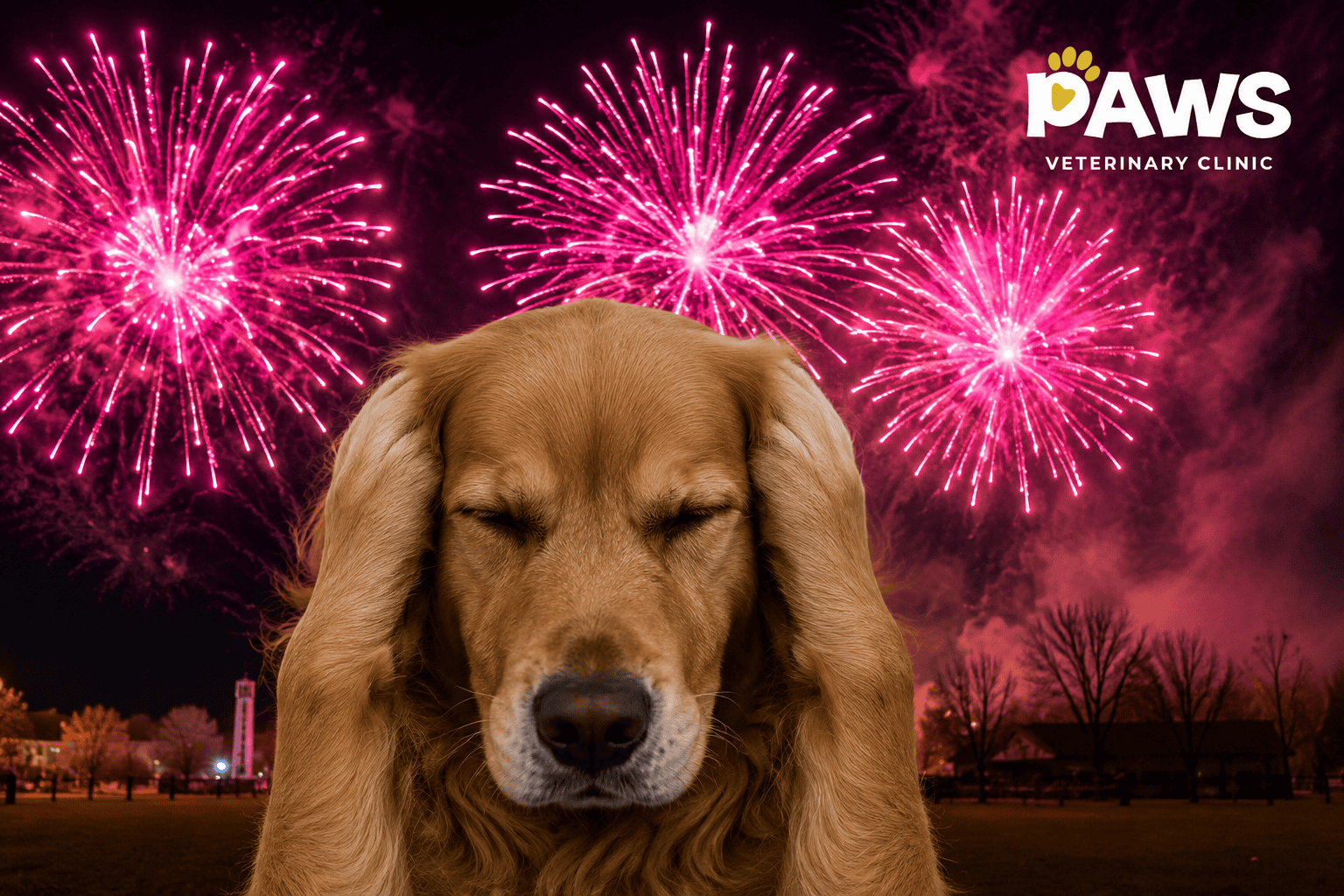


Fourth of July and Pet Safety
A Message from PAWS Veterinary Clinic:
The Fourth of July is a fun and festive holiday for many families, but for our canine and feline family members, it can be one of the most stressful times of the year. Fireworks, gatherings with loud music, unfamiliar visitors, cookouts, travel, and changes in routine can all cause anxiety /stress and may lead to dangerous situations.
At PAWS Veterinary Clinic, we want to help you prepare pre-celebration so you and your pets can stay safe, calm, and comfortable throughout the holiday!
Keep Pets Indoors (or with a Sitter):
Even pets who normally enjoy being outside may not do well with the festivities of the holiday and may do better when kept indoors during Fourth of July celebrations. Loud fireworks can startle dogs and cats, causing them to panic, run, hide, or attempt to escape.
Ensure doors, windows, gates, and screens are latched and secure. If guests are coming in and out of the house, consider keeping your pet in a quiet area away from doors to reduce the risk of an accidental escape. It can also be helpful to place reminders on doors to alert new guests there is a pet present and to keep doors closed. If you will be away from home celebrating the holiday, consider arranging for a trusted pet sitter to stay with your pet. Ideally, this should be someone your pet already knows
and feels comfortable with, as a familiar caregiver can help provide reassurance, reduce stress, and maintain a sense of safety and routine during the festivities.
Create a Safe, Quiet Space:
Set up a comfortable area where your pet can relax away from the noise or excitement. This may be a bedroom, bathroom, crate, or another familiar space in the home. Include their favorite objects/items, bed, toy(s), fresh water, and anything else that may help them feel secure. Closing blinds or curtains can help block flashing lights and views of strangers, and background noise such as soft music, white noise, or the television can help muffle fireworks or loud voices/sounds. An anxiety vest “thunder shirt” may also help provide comfort. For cats especially, make sure they have access to hiding spots and are able to reach high places to feel protected.
Make Sure Identification Is Up to Date:
More pets go missing around the Fourth of July than at many other times of the year. Before this holiday season, ensure your pet is wearing identification in case he or she escapes. Also, take a current photo of your pet, including any unique identifying markings, so you have an up-to-date image available in case he or she becomes lost. If your pet is microchipped, confirm that the registration information is current, including your phone number and address. A microchip only helps return your pet to you if the
contact information is accurate. Please feel free to bring your pet to the clinic prior to fireworks season so we can scan their microchip and help ensure the registered information is current. If your pet is not yet microchipped, we would be happy to place one to help support their safety and identification.
Avoid Fireworks, Sparklers, and Glow Sticks:
Fireworks and animals do not mix. Only a small number of pets do okay with large gatherings and firework displays, so reconsider leaving them at home. Do not allow pets near fireworks, sparklers, fire pits, or grills. Glow sticks and glow jewelry should also be kept out of reach. While they may seem
harmless to put on your pet to make them “glow up”, chewing on them can cause significant gastrointestinal issues including drooling, vomiting, hemorrhagic diarrhea, and even death.
Watch Out for Holiday Foods and Drinks:
Human food is made for humans, and many common party foods are unsafe for pets. Keep dogs and cats away from alcohol, bones, fatty meats, corn cobs, onions, garlic, chocolate, grapes, raisins, and desserts (especially those labeled “sugar free” containing xylitol). All trash cans should have lids and be properly secured, especially after cookouts. Leftover food, skewers, foil, bones, and packaging can all be very tempting and dangerous if consumed.
Know the Signs of Stress:
Firework anxiety can look different between canines and felines, and even between pets in the same household. Signs of stress may include panting, pacing, trembling, drooling, hiding, vocalizing, attempting to escape, destructive behavior (chewing on furniture or through doors), decreased appetite,
or clinginess/attentiveness. Cats may hide, refuse food, become more withdrawn, or act unusually restless. If your pet is anxious, stay calm and avoid punishment. Fearful behavior is not disobedience; it is a sign that your pet needs comfort, patience, and support.
Talk to PAWS Veterinary Clinic Before the Holiday:
If your pet has a history of severe anxiety during fireworks or loud events, please contact us at (561) 566-7297 before the Fourth of July! There are medications, supplements, and behavior strategies that we can discuss to help your pet feel more comfortable! Please do not wait until the day of the holiday if your pet needs anxiety medication as we will be closed to celebrate our nation’s 250th birthday. Planning ahead allows us to better serve you and provide your family with the tools to have a happy and safe
holiday!
After the Fireworks:
Once the celebrations are over, check your yard before letting pets outside. Firework debris, food scraps, trash, and other hazards may be present in your yard. Keep dogs leashed while going outside until you are confident the area is safe of any potential hazards.
Final Thoughts:
The Fourth of July can be overwhelming for dogs and cats, but preparation makes a HUGE difference. Keeping pets indoors, creating a quiet space, updating identification, avoiding holiday hazards, and speaking with our trained medical staff can help keep your furry family member safe and comfortable!
From all of us at PAWS Veterinary Clinic, we wish you, your family, and your pets a happy and safe Fourth of July! Happy 250th Birthday America!